About
In complex organisations, strategy rarely fails because it's unclear. It fails because governance structures, decision rights and delivery systems can't flex when conditions change.
My first job out of Stellenbosch University was at a small startup of very senior engineers. My first task was to implement a 32-page requirements document. Every idea I might have had about how to solve the problem had already been had. I was an overqualified typist.
My manager noticed the frustration and handed me something new to build, along with an iterative approach called Extreme Programming. That was 2009. I've been circling the same question ever since: what has to be true for people to do their best work — and what stops organisations from letting them?
The answer changed shape as the vantage point changed. Building banking switch platforms in regulated financial systems, it was about workflow. As a Scrum Master, about empowering a product owner and teams to build at their best. Running Mobile Product at Travelstart, with a team of eighteen people across three regions and eight time zones, it was about delivery cadence and where product decisions actually got made. Leading a national consulting team across finance, insurance, government, mining, and retail, it was about the distance between adopting a framework and making structural change
“Most organisations can decide quickly. Very few can re-decide”
Since 2022, I've been inside Old Mutual's centralised product, service and technology function, architecting and embedding an enterprise interaction model across thirteen portfolios and more than two hundred teams. That includes governance cadences, decision rights, role clarity, and the tooling architecture underneath it all.
The test came in 2025, when the group moved from a centralised to a federated structure. That kind of shift usually costs an organisation a year of rediscovery. Because the operating and interaction models were already coherent, adaptation was fast, with measurable throughput improvement within two quarters.
That's the work I care about now. Not agile as a practice, though it's the foundation everything I know is built on, but adaptability as a property of the organisation itself. The ability to change direction on regulation, leadership, structure or technology without reinventing yourself each time.
Most organisations can decide quickly. Very few can re-decide.
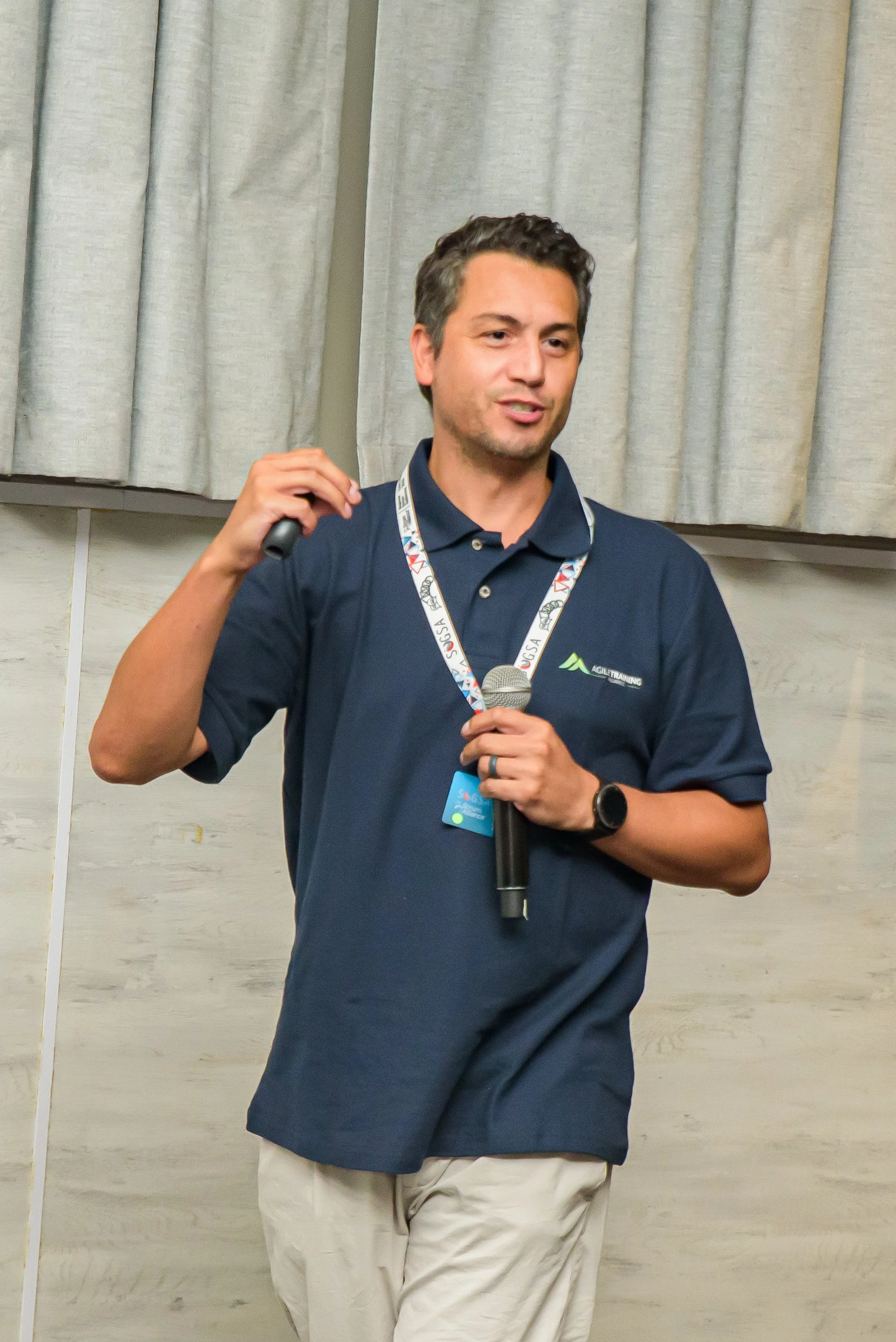
I'm a co-founder of Agile Training Alliance, an engineer by training, and based in Cape Town.